Showing posts with label ISRO. Show all posts

Saturday, 26 August 2017

REPLACEMENT SATELLITE READY FOR LAUNCH

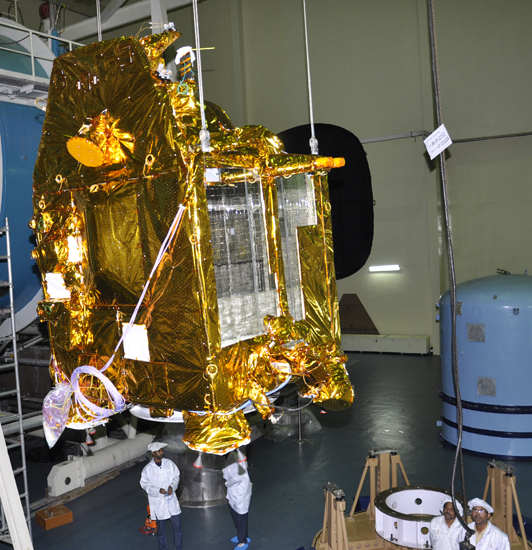
IRNSS-1H, the eighth satellite of the IRNSS constellation will be launched on 31st August, 2017 at 18:59 Hrs IST from SHAR, Sriharikota using PSLV-C39 launch vehicle.

IRNSS-1H is a replacement satellite that will replace IRNSS-1A, the first satellite of the constellation. The latter became redundant after the failure of its all three atomic clocks onboard. The satellite was launched on 1 July, 2013 using PSLV-C22 rocket. The redundant satellite will continue to function but the data sent by it will be coarse, thus of no use. The mission life of each of the satellite was 10 years. Failure in just 4 years raised some serious concerns regarding the ambitious program.

It is being said that ISRO has replaced the atomic clocks in IRNSS-1H with the ones from a different vendor. The clocks were supplied by Spectratime, a Swiss firm and market leader in manufacturing of such instruments.

The NAVIC(Navigation with Indian Constellation) system, similar to the GPS and GLONASS provides navigation facilities with an accuracy of 10 meters to public users and 0.1 meters for military(restricted usage).

In picture, IRNSS-1H in a clean room in SDSC SHAR

Image Credits: ISRO


Monday, 19 June 2017

NAVIC PROGRAM SUFFERS A BLOW

IRNSS-1A, the first satellite in the IRNSS constellation has become redundant after the failure of all three atomic clocks onboard. The satellite was launched on 1 July, 2013 using PSLV-C22 rocket. 

The satellite was the first one among the series of 7 satellites of the IRNSS constellation to be placed in orbit. The NAVIC(Navigation with Indian Constellation) system, similar to the GPS and GLONASS, provides navigation facilities with an accuracy of 10 meters to public users and 0.1 meters for military usage.

The satellite had 3 rubidium atomic clocks, one primary and two as backups. The first clock failed in July, 2016 and the other two failed some months back. The failure of all three clocks has made the satellite redundant and thus requires a replacement. Reason for the failure is still unknown. The clocks were supplied by Spectratime, a Swiss firm and market leader in manufacturing such instruments. 

Rubidium atomic clocks are most widely used clocks in space applications and are considered to be quite accurate along with being relatively cheaper than hydrogen maser clocksThe principle of navigation by satellite is based on the transmission of signals coming from at least four satellites, to the users. To get very precise location data, these signals must be perfectly synchronized. The extremely precise measurement of time on board each satellite, achieved through atomic clocks, is thus a central condition for the positioning performance of the system

The clocks in GLONASS system have also failed which were supplied by the same firm. ISRO had signed a contract worth 4 million Euros with Spectratime in 2004 to supply clocks for 9 satellites of IRNSS program. 7 satellites in orbit and 2 satellites as back-ups. These clocks provide an accurate time measurement of around 10 billionths of a second per day

ISRO has decided to launch a replacement for the failed satellite. The replacement satellite IRNSS-1H is expected to be launched in second half of 2017. It is being said that ISRO has replaced the atomic clocks onboard IRNSS-1H with new ones. It has also been heard from ISRO sources that two more clocks on other satellites have developed glitches and hence all the remaining satellites are being run on only one clock and keeping two on off mode to extend the life of satellites. While the initial plan was to run two clocks and keep the remaining one as back up.     

The redundant satellite will continue to function but the data sent by it will be coarse, thus of no use. The mission life of each of the satellite was 10 years. Failure in just 4 years raises some serious concerns regarding the ambitious program

Image Credits: ISRO 

IRNSS-1A


Monday, 20 February 2017

CRYOGENIC HURDLE CLEARED

The Indian Space Research Organisation (ISRO) successfully tested its indigenously developed Cryogenic Upper Stage (CUS) for GSLV MkIII on February 17, 2017. The cryogenic stage designated as C25 was tested for a flight duration of 640 seconds at ISRO Propulsion Complex (IPRC) in Mahendragiri. C25 Stage had earlier been tested successfully for 50 seconds on January 25, 2017 to validate all the systems. 
Prior to Stage development hot tests, three CE20 engines were realised and two engines were subjected to qualification tests in sea level conditions. This included 800 seconds duration hot test and the third engine identified for flight was tested in high altitude conditions for a duration of 25 seconds.
This Stage test is a significant milestone as it is the last in series of engine and stage development hot tests before the first development flight of GSLV MkIII, expected in April, 2017.
The C25 stage is the most powerful upper stage developed by ISRO and uses Liquid Oxygen (LOX) and Liquid Hydrogen (LH2) propellant combination.  The stage carries 27.8 tons of propellants loaded in two independent tanks. Development of a cryogenic stage has unique design challenges, with liquid Hydrogen stored at -253 deg C and liquid Oxygen stored at -195 deg C in its tanks. To store these cryogenic fluids, special multi-layer insulation is provided for the tanks and other structures.
The development of the cryogenic stage was led by Liquid Propulsion Systems Centre (LPSC) with support from various System Development Agencies from other centres of ISRO, viz., Vikram Sarabhai Space Centre (VSSC), ISRO Propulsion Complex (IPRC) and Sathish Dhawan Space Centre (SDSC), SHAR.
The Cryogenic Stage development tests were carried out in two phases. First, the Stage was subjected to fluid mock-up, wherein the stage preparation and servicing at launch complex in SDSC, SHAR, Shriharikota was completed to prove all the ground facilities established for servicing the cryogenic stage. This was followed by testing of the Stage at ISRO Propulsion Complex, Mahendragiri. From the Stage realisation to completion of testing was accomplished in four months.
The performance of the Stage during the hot test was as predicted. Successful hot test for flight duration qualifies the design of the stage and the robustness of the facilities conceived and established towards its development.
The flight cryogenic stage is in advanced stage of realisation, and forms the upper stage of GSLV MK-III, the next generation launch vehicle of ISRO, capable of launching 4 ton class satellites into Geosynchronous Transfer Orbit (GTO). The vehicle consists of two solid strap-ons (S200) motors, one earth storable liquid core stage (L110) and the Cryogenic Upper Stage (C25).
The GSLV MK-III vehicle integration activities are in progress at SDSC, SHAR for its first development flight (GSLV MkIII-D1) targeted for April 2017.
Source: ISRO
Image Credits : ISRO

#BelieveInIsro


"JAI HIND"


104 SATELLITES IN ONE GO

Yes you read that right. Not 4 not 10, it is 104. 

In its thirty-ninth flight on 15th February, 2017, PSLV C-37, the star performer of ISRO blasted off from SDSC(Satish Dhawan Space Center) SHAR(Shriharikota) along with 104 satellites on board. Flight which took off at 09:28 AM IST, took a little less than 29 minutes to place all its 104 passengers in their designated orbits.

The primary payload on board the launcher was CARTOSAT-2 series satellite. Weighing around 714 kg at launch, the satellite is similar to 4 other CARTOSAT satellites currently in orbit. The satellite was injected in 505 km Sun Synchronous Orbit(SSO) and would later be brought to its operational orbit by firing the Liquid Apogee Motor(LAM) of the satellite.

CARTOSAT will provide regular remote sensing services using its Panchromatic and Multi-Spectral cameras. The imagery sent by the satellites will be used for cartographic applications, urban and rural applications, utility management like road network networking , water distribution, etc.

Besides CARTOSAT, there were two other Indian passengers on the flight. PSLV C-37 carried two ISRO Nano Satellites(INS). INS-1-A and INS-1-B. Basically INS on board PSLV this time are mainly technology demonstrators having few missions to be carried out by them. INS-1-A had a lift off weight of 8.4 kg while INS-1-B weighed 9.7 kg at lift-off.

101 of 104 satellites launched were from foreign customers. 96 were from USA, 1 each from Israel, Kazakhstan, The Netherlands, Switzerland and UAE. Together, the foreign satellites weighed 645.9 kg at lift-off.

This mission was special as it was for the first time that so many satellites were being send into space at one go. With such a big number, the complexities associated with the mission increases many-fold. The satellite release mechanism which releases the payloads after reaching the desired orbit, had to be modified and function accurately each of the 104 times. No margin of error at all.

This mission is just an example of the growing stature of ISRO in the space community. ISRO's PSLV is now seen as one of the most trusted launcher in the world for the launch of polar satellites. We are growing very fast and now we are preparing the next two important launch missions. One being the launch mission of GSLV MK-II and other one, the most awaited one, the launch mission of the big daddy, GSLV MK-III.

Stay tuned for more.

Image Credits: ISRO

#BelieveInIsro   

"JAI HIND"


Saturday, 18 February 2017

EXCITING WEEK FOR ISRO

This week has been very crucial for ISRO as it achieved 2 major milestones in a span of 3 days.
The first one being the successful flight of PSLV C-37, launched from SDSC SHAR on 15th February, which placed 104 satellites into orbit, 101 of them belonging to foreign customers.

The second major milestone was the successful test of ingenuously developed cryogenic engine for full duration of 640 seconds, at ISRO Propulsion Complex, Mahendragiri. The engine labeled as C25 was earlier tested for a duration of 50 seconds on 25th January, 2017 to validate all the systems.

I will be writing on both of these events in detail in my next two articles. So stay tuned.


#BelieveInIsro


"JAI HIND"


Wednesday, 11 January 2017

2017, AN YEAR TO WATCH OUT FOR ISRO

2017 is going to be an eventful year for ISRO with several important launches planned back to back. ISRO is already very close to achieving its aim of having at least one launch mission every 30 days.

The first launch planned this year is the launch of CARTOSAT-2D satellite using PSLV-C37 along with several small payloads from foreign customers. The launch is expected in early February.

The second launch and probably the one to be most watched out for will be the first development flight of GSLV-MK III. The vehicle will launch GSAT-19E, a communication satellite weighing around 3200 kgs. Liftoff can be expected in March.

The third launch to keep an eye on will be the launch of GSAT-9 satellite onboard GSLV-MK II. Weighing around 2195 kgs, the satellite will have a power generation capacity of 3000 watts and is expected to give 12 years of service.

Other than these there are several small missions planned for the year ahead.

In the image attached below, GSLV MK-III can be seen integrated with CARE at second launch pad SHAR, a day prior to LVM-3/CARE mission.

Image Courtesy : ISRO 


Saturday, 5 November 2016

MARS ORBITER MISSION

Today is the third anniversary of the launch of ISRO's ""MARS ORBITER MISSION"" . Three years back MOM lifted off from Shriharikota onboard PSLV XL C-25.

The mission was a technology demonstrator, showcasing our capabilities of conducting an inter planetary mission. With the successful insertion in the martian orbit on 24th September, 2014 , India became the first nation to reach red planet in first attempt.

The mission life of the orbiter was six months but the precision insertion into the orbit saved a lot of fuel on the orbiter, which was used to extend the life of orbiter.

The mission is the best example of the capabilities of our space scientists. This mission was also the lowest cost mission to the red planet costing only INR 450 crores.

Image Courtesy : ISRO

""JAI HIND""


Saturday, 22 October 2016

PRIDE OF INDIA

8 years ago, ISRO made history. Chandrayaan-1, India's first mission to moon, was launched successfully from Sriharikota on 22nd October, 2008. The spacecraft weighing 1380kg's was launched using highly dependable PSLV C-11 rocket, which took off from the second launch pad, SHAR at 06:22 IST.

The spacecraft entered the lunar orbit on 8th November, 2008 and worked normally for 312 days from launch. The major achievement of the mission was the discovery of widespread presence of  water molecules in the lunar soil. The mission also included the Moon Impact Probe which struck the south pole of moon in a controlled manner making India the fourth country to have its flag on moon. 

The mission was the breakthrough in India's space programme. The mission is a perfect example of the capabilities of the space scientists that our country is blessed with. Though the funds provided were not very high and the technological help from other nations was also limited, still we were able to reach the moon in our first attempt.

""JAI HIND""

Image courtesy : ISRO


Saturday, 17 September 2016

KEEP CALM AND BELIEVE IN ISRO

ISRO does it again.....!!!!

On 8th September 16:50 hrs IST, GSLV-F05 lifted off from the second launch pad of Sriharikota to launch INSAT-3DR weighing 2211 kg to GTO(Geostationary Transfer Orbit). The satellite was injected into the orbit after a flight lasting 1024 seconds approx. This satellite was the heaviest ever launched by ISRO. The launch was a significant one as it was the first operational launch of GSLV, which uses indigenously developed CUS(Cryogenic Upper Stage)

Just for readers information, CUS is a very complex technology and only 5 countries other than India possess this. The complexity of this stage can be understood by the fact that liquid oxygen(-183 deg Celcius) as an oxidizer and liquid hydrogen(-253 deg Celcius) are used in this technology. CUS produces more thrust for every gram of fuel burned as compared to solid and earth-storable propellants. 

Coming to the satellite, it is an advanced weather satellite carrying 4 payloads namely Imager, Sounder, Data Relay Transponder (DTR) and Satellite Aided Search and Rescue Transponder (SAS & R). Expected mission life of the satellite is 10 years.

Here are some majestic clicks from the launch.
PIC Credits - ISRO


Friday, 2 September 2016

GSLV-F05/INSAT-3DR

Don't miss the launch of our GSLV-F05/INSAT-3DR on 8th Sept. 2016, at 16:10 hrs IST. The launch is a very crucial one as it is the first operational flight of GSLV after two development flights. As far as the satellite INSAT-3DR is concerned, it is an advanced weather satellite weighing 2211 kg. GSLV-F05 will be using the indigenous cryogenic upper stage, which has given successful results on its previous two launches.

Sharing some beautiful pics of the launcher.
Image courtesy-ISRO


Sunday, 21 August 2016

Was off the blog for quite a while. But now, here I am....back to blogging.....will try to post all the updates happening in the field of defence and space with context to our country. 


In pic, the majestic lift-off of the PSLV C-34 carrying CARTOSAT-2 and 19 other co-passengers from Second Launch Pad, Satish Dhawan Space Centre (SDSC), Sriharikota.

Friday, 2 October 2015

ASTROSAT LAUNCH SUCCESSFUL


ISRO DOES IT AGAIN......

PSLV is now on the way to become one of the most reliable rocket launcher in the world. The recent successful launch of ASTROSAT with 6 other foreign satellites via PSLV C-30 is just another feather in the cap.

With a lift off mass of 320.2 tons, the vehicle lifted off the first launch pad of Satish Dhawan Space Centre, Sriharikota at 10:00 am on 28th september, 2015. In 25 minutes 33 seconds, the vehicle successfully injected all the 7 satellites into their respective orbits.

Among the six foreign satellites, one was from U.S.A., one from Canada and 4 from Indonesia. This the first time that ISRO is launching a satellite for U.S.A.

ASTROSAT is INDIA'S first dedicated multi-wavelength space observatory. One of the specific features of ASTROSAT mission is that it enables the simultaneous multi-wavelength observations of various astronomical objects with a single satellite. It will observe the space in Optical, Ultra-violet, low and high energy X-ray regions of the electromagnetic spectrum.

Success, a habit of ISRO.......

""JAI HIND""

Sunday, 13 September 2015

GSLV D-6 LAUNCH


Another feather in the cap for ISRO, as it successfully launched the GSAT-6 satellite on 27th August, 2015  using GSLV rocket which used indigenous built cryogenic engine. This was the second successive launch using the indigenous cryo-stage, the prior being launch of GSAT-14 satellite on 5th January, 2014 .

Cryogenic stage is technically a very complex system as it uses liquid oxygen(-183 deg C) and liquid hydrogen(-253 deg C). Maintaining such extremely low temperatures during the entire launch period is not an easy task at all. Only six space agencies including ISRO have been able to master the art of cryogenic stage technology.

""JAI HIND""

Wednesday, 5 August 2015

ISRO

ISRO......


Our vision is to harnass space technology for national development, while persuing space science research and planetary exploration.

From past 46 years of its establishment, ISRO has never dissapointed the nation on a single occasion. ISRO, the shining star of the nation.....

""JAI HIND""